Best Donor Gifts: Meaningful Recognition That Builds Lasting Relationships
Selecting the best donor gifts requires more than choosing an attractive object. The most effective donor recognition gifts honor generosity, reinforce connection, and reflect the values of the institution itself. When done thoughtfully, a donor gift becomes a lasting symbol of appreciation—one that deepens loyalty and strengthens long-term relationships.

Gifts and awards such as this acrylic block, trophies, or wall plaques often fail to create lasting impact or emotional connection with donors, patrons, or alumni.
Standard recognition awards—coffee mugs, water bottles, lucite blocks, wall plaques, mass-produced trophies, and predictable branded swag—often fail to create the sense of appreciation institutions intend.
While familiar and easy to source, these items tend to feel impersonal and interchangeable, offering little emotional connection to the donor or the moment being recognized. They’re also recognizable to any recipient as recycled and not original.
Because they rely on templated design, stock materials, and predictable formats, they are frequently perceived as obligatory rather than intentional, diminishing their impact as meaningful donor gifts.
This guide explores what makes a lasting donor recognition keepsake truly meaningful and highlights the types of recognition gifts that consistently resonate with donors across universities, nonprofits, and cultural institutions.
We’ll explore the common pitfalls when choosing donor recognition gifts—why generic plaques and mass-produced awards often fall flat, leaving donors underwhelmed instead of inspired.
What Makes A Donor Gift Truly Memorable And Meaningful?
The best donor gifts share several essential qualities that distinguish them from ordinary donor recognition items. They are personal rather than promotional, intentional rather than generic, and designed to endure beyond the moment of presentation.
Whether you are honoring major donors, recognizing long-standing patrons, or generating support for a capital campaign or new building addition, high-impact donor mementos effectively communicate gratitude in a way that feels meaningful and considered.
Unlike mass-produced donor recognition gifts, the best institutional donor gifts reflect the mission, place, or story of the organization itself—creating a lasting emotional connection that reinforces long-term donor relationships.
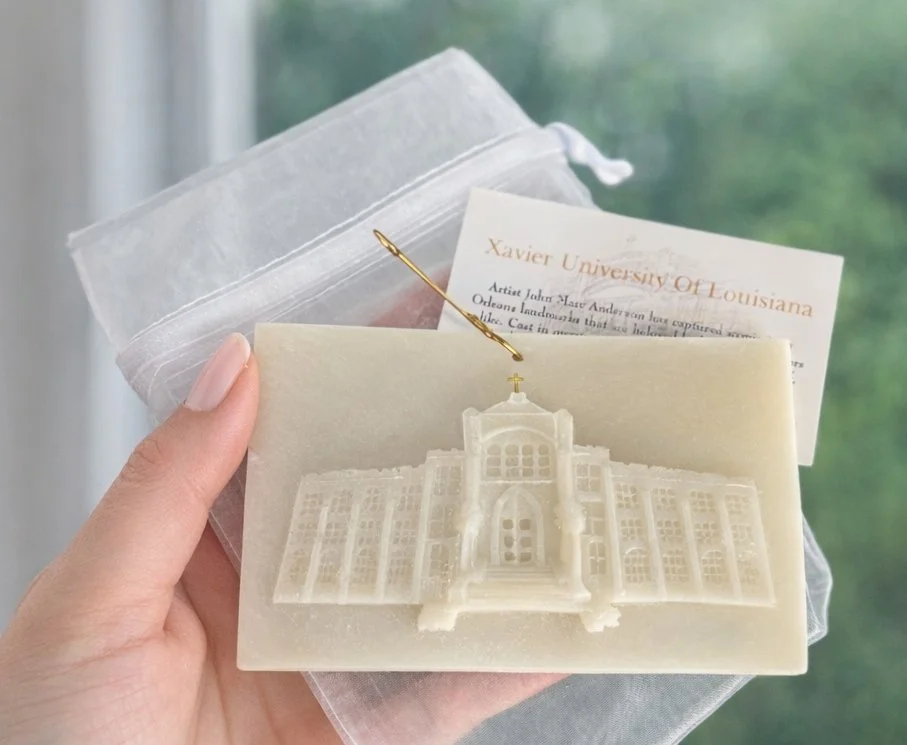
A donor gift that feels considered, personal, and lasting such as this handcrafted architectural memento that transforms a familiar campus landmark into a quiet keepsake, offers patrons something far more meaningful than standard branded swag. Memento for Xavier University of New Orleans, 2025. Given to graduates of The School of Pharmacy at commencement.
The most successful custom donor or recipient gifts are objects donors choose to keep, display, or revisit—rather than items that feel disposable or overly branded.
For universities, faith-based institutions, cultural organizations, and nonprofit campaigns, donor gifts that emphasize craftsmanship, permanence, and relevance consistently outperform generic awards and promotional merchandise.
When thoughtfully designed, an institutional donor recognition token becomes a physical reminder of shared values and impact, not simply a token of acknowledgment.
A gift to a donor or patron should feel appropriate to the level of giving, as well, and to the kind of relationship being recognized. Universities, for example, have broader leeway when using a price point gift because it can feel welcome when presented to students as well as large donors.
The Best Donor Gifts Share a Few Essential Qualities
The way to give back to your most important givers are defined by a small set of essential qualities that consistently separate meaningful donor recognition from generic acknowledgments.
At their core, the most effective donor recognition gifts are personal rather than promotional, intentional rather than generic, and designed to endure long after the moment they are presented.
Example 1: Personal Rather Than Promotional
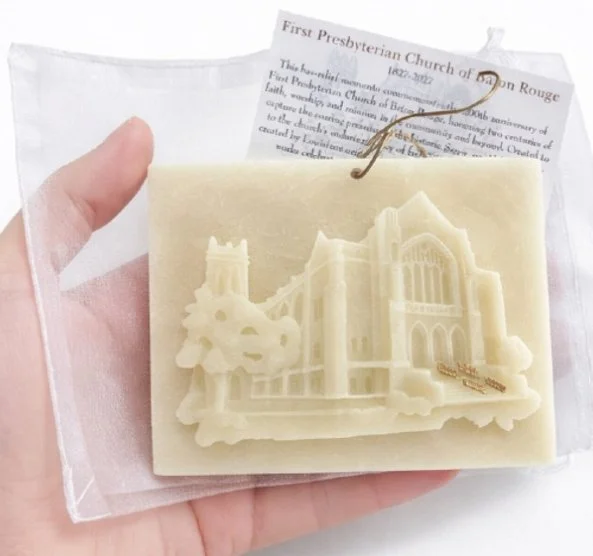
Our studio creates stirring mementos that commemorate place and honors the importance of yourmost important asset, often hidden in plain sight. First Presbyterian Church of Baton Rouge, memento celebrating their 200th anniversary, gift for patrons and benefactors.
What works:
A custom patron gift derived from an architectural detail of the institution itself—such as a facade, cornerstone, stained-glass motif, or historic relief—translates place and memory into a tangible object. Donors immediately recognize the reference without the need for overt branding.
What doesn’t:
A mass-produced award or branded item bearing only a logo or slogan, which often feels interchangeable and lacks emotional connection. This is sometimes called “swag fatigue”.
Why it matters:
The most effective donor recognition gifts feel personal because they reflect where the donor gave, not just who received the credit.
Example 2: Intentional Rather Than selected from a catalog
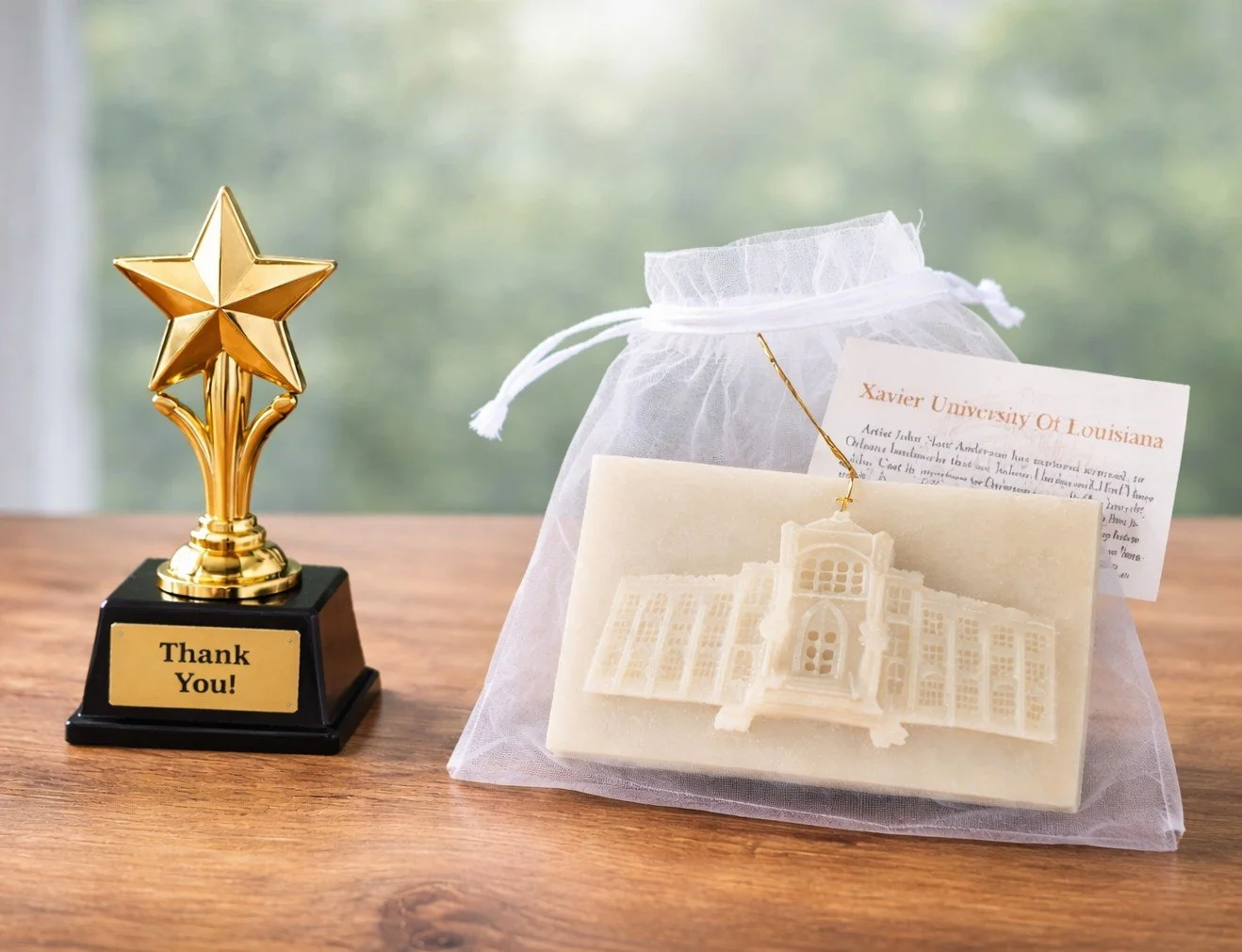
A typical branded small donor or patron award gift contrasted with a handcrafted, place-based memento designed to feel personal, lasting, and meaningful. Which would you be thrilled to receive?
What works:
A memento or gift created specifically for a capital campaign milestone—commemorating the completion of a new wing, restoration project, or campus expansion—designed in limited quantities and tied directly to that place and moment in the institution’s history.
What doesn’t:
Generic plaques or trophies- reused year after year with only the inscription changed- offer little memorable value over time.
Why it matters:
Intentional donor gifts signal that the recognition object was thoughtfully planned, not selected from a catalog.
Example 3: enduring vs. ephemeral
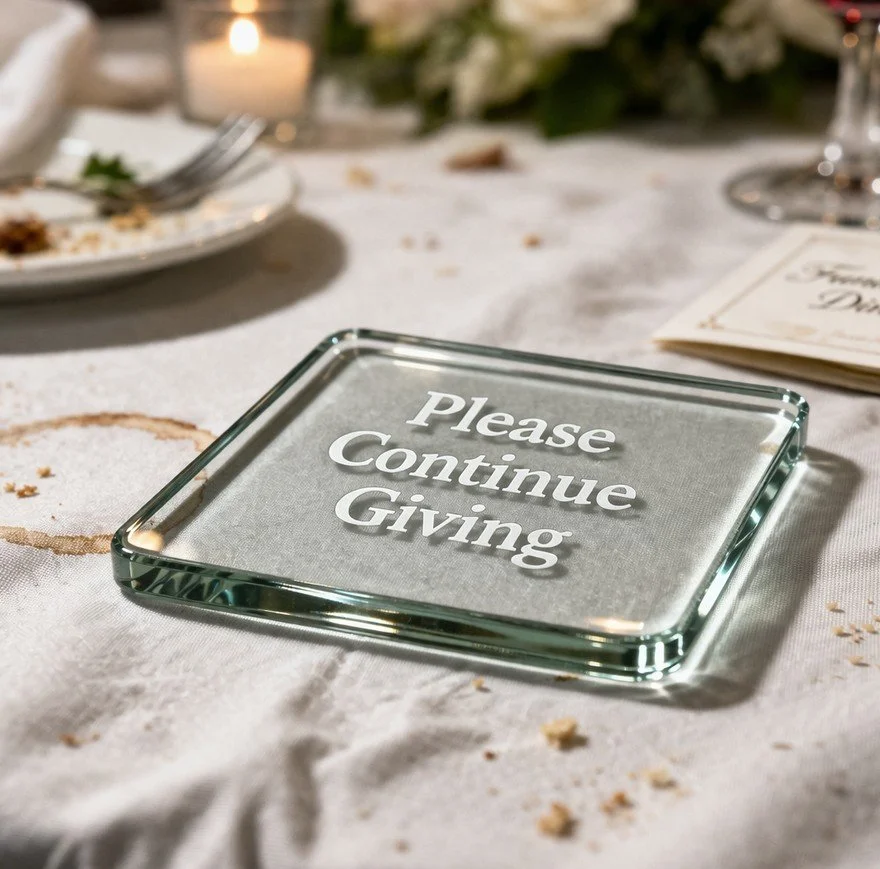
Donors remember how you make them feel, quietly reinforcing appreciation and long term connection. Objects like trophies, acrylic blocks, or wall plaques can convey a message of low prestige.
What works:
An enduring donor gift crafted from permanent materials and intended to be displayed or handled over time—objects donors keep on desks, shelves, or in personal spaces. An ephemeral gift has a fleeting, short lived lifespan and effect on not only a recipient, but on the entire crowd viewing the shared experience.
What doesn’t:
Ephemeral or novelty items that lose relevance once the event or campaign concludes.
Why it matters:
The best institutional donor gifts remain present in a donor’s daily life, quietly reinforcing appreciation and long-term connection.
Example 4: Donor Gifts That Reflect Institutional Story
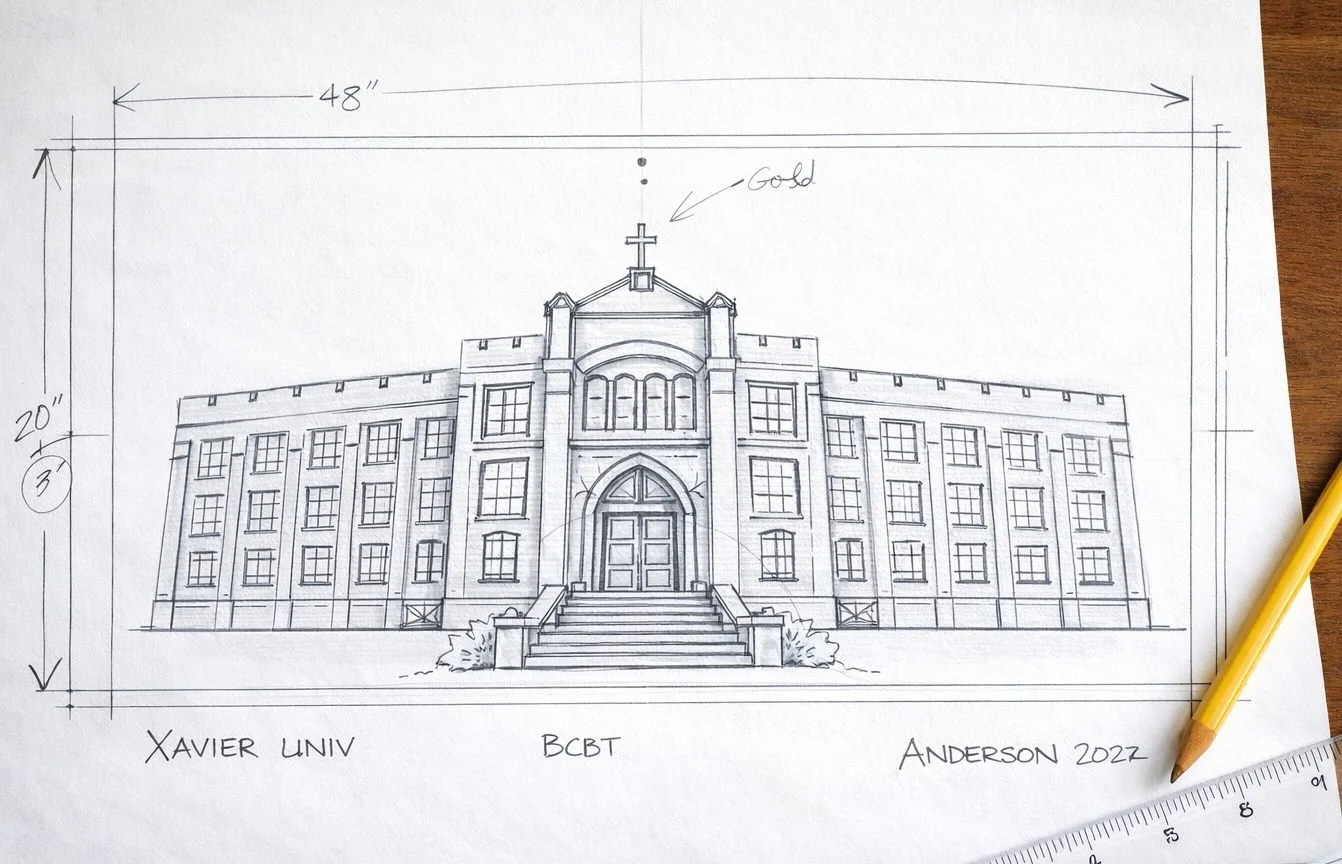
When donor gifts tell a story visually, they remain legible and relevant for years to come. Architectural assets offer a natural and enduring starting point. A project sketch for Xavier University of New Orleans.
What works:
Custom mementos that award dedication or giving that incorporate symbolism tied to an institution’s mission, history, or physical environment—without relying on heavy text or explanation. The impact should be far more visual - and less graphic- to provide a meaningful and timeless effect.
What doesn’t:
Overly literal or text-heavy recognition items that feel informational rather than meaningful. Text and word exhaustion is all around us- the more you minimize it, the better.
Why These Examples Matter
These examples illustrate why the best donor gifts succeed: they are not designed as promotional materials, but as meaningful objects. For major donors, capital campaigns, universities, cultural institutions, and faith-based organizations, donor recognition gifts that emphasize personal relevance, intentional design, and permanence consistently create stronger emotional impact and long-term donor engagement.
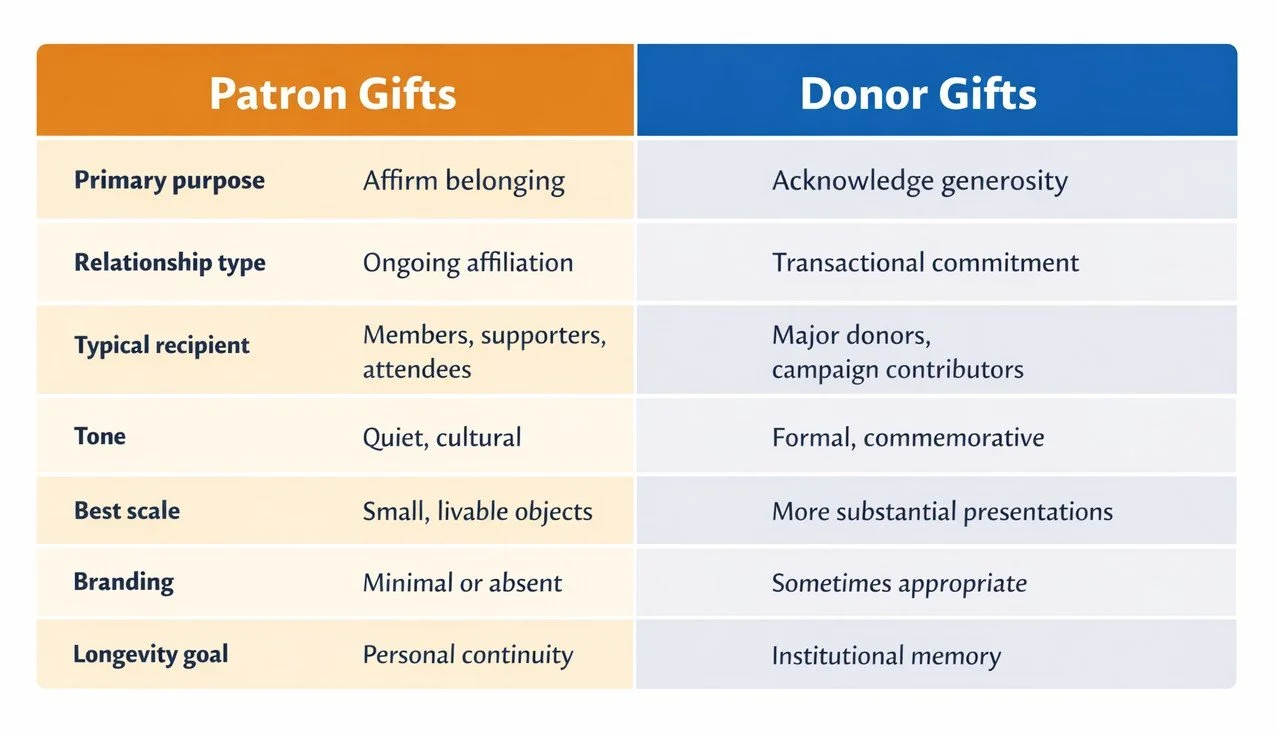
Further, gifts for patrons and ongoing supporters vs. gifts for donors have subtle differences, as well. The primary purposes are similar, though a patron gift needs to affirm belonging, while a donor gift acknowledges generosity. Gifts should also consider relationship type, the typical recipients role in supporting the institution, the tone of the gift tailored for its short term and long term use, and the scale of the gift to the patron or donor.
Patron gifts work best when they feel personal and unobtrusive. Donor gifts work best when they feel formal and commemorative. Branding is a critical element to consider when choosing a patron or donor gift, as well.
Patron gifts are most effective when non-branded or minimally branded. Patrons already understand where the object comes from; overt branding can make the gift feel promotional or transactional. Subtle references to place or architecture often communicate affiliation more gracefully than a logo or inscription.
Donor gifts can, in certain contexts, include measured branding. When a gift marks a defined act of generosity—such as a campaign close, naming opportunity, or milestone contribution—branding or inscription can provide clarity and formal acknowledgment without diminishing the object’s dignity.
Personal Rather Than Promotional
Highly effective prioritize personal connection over branding. While logos and messaging may have a place, the best institutional donor keepsakes avoid feeling like marketing materials. Instead, they reflect the values, history, or physical environment of the organization itself. Donors are far more likely to retain, display, and remember donor gifts that feel thoughtful and authentic rather than overtly promotional. For universities, cultural institutions, faith-based organizations, and nonprofits, personalization signals respect and reinforces the relationship behind the gift.
Intentional Rather Than Generic
Generic donor recognition items are easily forgotten. In contrast, intentional donor gifts demonstrate care through design, material choice, and relevance. The best donor gifts are created with a specific purpose in mind—whether commemorating a milestone, recognizing leadership-level giving, or marking participation in a major fundraising effort. Custom donor gifts that reference a building, campus, landmark, or institutional story consistently carry greater perceived value than mass-produced awards, even when budgets are similar.
Designed to Endure Beyond the Moment
Durability is one of the most overlooked qualities of effective donor recognition gifts. The best gifts are designed to last—not only physically, but emotionally. Objects made with permanence in mind remain present in a donor’s life long after an event concludes or a campaign ends. For capital campaigns, anniversary celebrations, and legacy giving programs, enduring donor gifts serve as ongoing reminders of impact and shared purpose rather than one-time gestures.
Donor Gifts as Relationship-Building Tools
When approached thoughtfully, custom made gifts function as more than expressions of thanks—they become relationship-building tools. The most successful institutional donor gifts reinforce trust, deepen engagement, and strengthen long-term donor loyalty. By prioritizing personal meaning, intentional design, and lasting materials, organizations create donor gifts that honor both the contribution and the contributor.
Architectural Landmark Mementos tie into deep emotions
Architectural landmark mementos are among the most meaningful donor gifts an institution can offer. By capturing a beloved building or campus icon, these gifts connect donors directly to place, memory, and legacy. A church or temple congregation for example, is often deeply tied to place. The building isn’t just a backdrop—it’s where people were baptized, married, remembered, and gathered week after week.
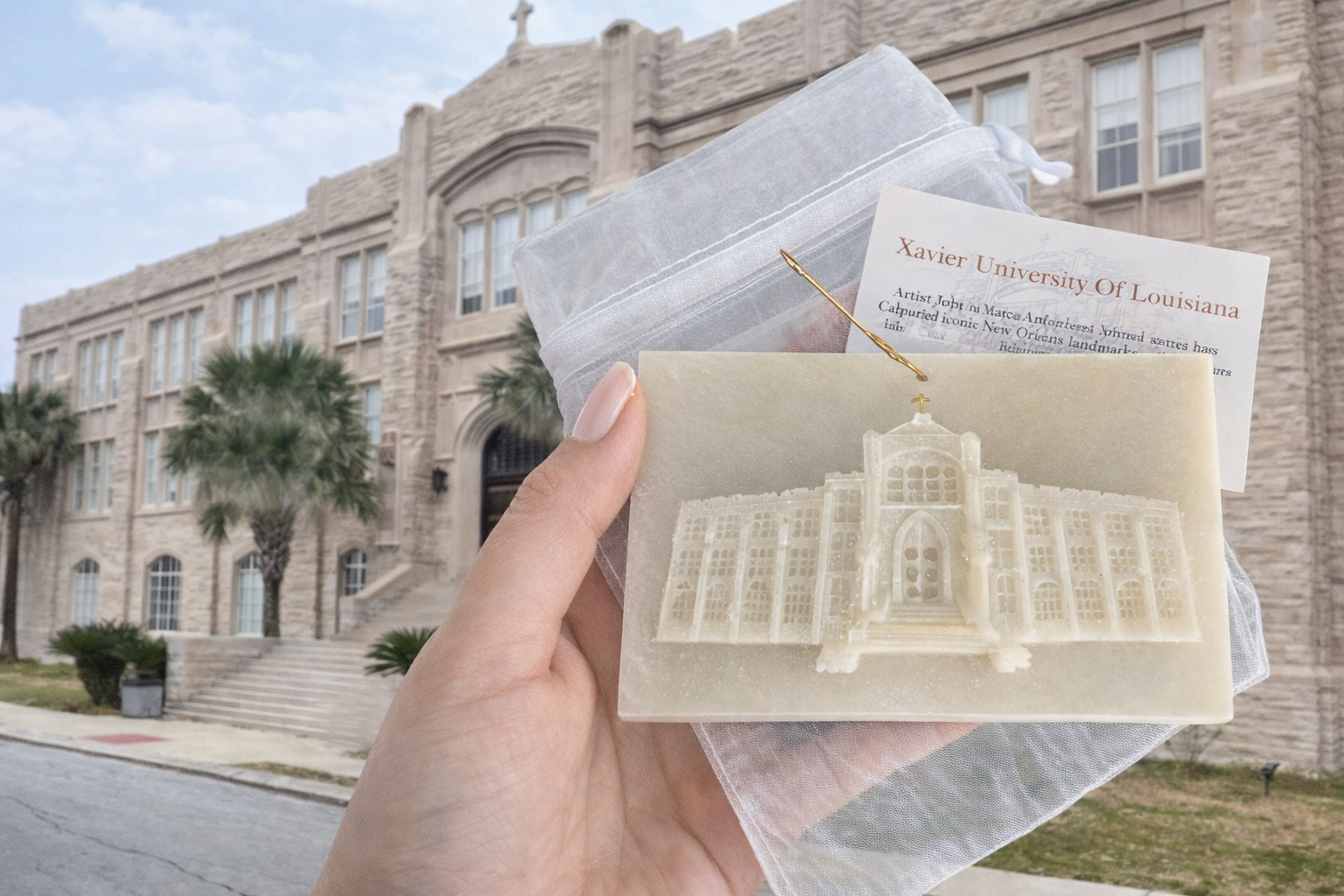
A project we completed from start to finish for Xavier University of New Orleans. the finished crsytal quartz memento is used for donor gifts, commencement ceremonies, patron dinners, and other events. The enduring value of architecture is a tremendous asset to any organization.
Over time, the space itself carries meaning. When donor recognition reflects that physical place—an architectural detail, a familiar facade, a shared landmark—it feels natural and personal.
For faith-based organizations, donor gifts that reference the institution itself tend to resonate far more than generic recognition, because they acknowledge not just the gift, but the relationship.
Municipalities, corporations, medical institutions, sports organizations, and cultural venues are also deeply tied to place.
Architecture conjures a collection of shared moments, quiet routines, and long memories. When donor recognition reflects that physical place—an architectural detail, a familiar façade, a shared landmark, mascot, or icon—it doesn’t need much explanation. People recognize it immediately, because they already have a relationship with it.
A city hall, a hospital wing, a campus building, or a stadium entrance can hold just as much meaning for the people who support it. When recognition draws from those shared spaces, it feels grounded and sincere rather than symbolic for symbolism’s sake.
In every case, the most effective donor gifts acknowledge more than a contribution. They reflect participation, presence, and a shared investment in something that endures. And when recognition is rooted in place, it tends to feel less like an award—and more like a quiet reminder of why the relationship mattered in the first place.
The rise and fall of swag?
Over the last few years, “swag” popularity as donor/patron gifts has declined because recipients now expect thoughtfulness over cheap, disposable items, with many interpreting generic freebies as promotional, easily obtained, and landfill-bound, leading organizations to shift towards higher-quality, sustainable, or experiential gifts that genuinely build connection and reflect values, rather than just offering clutter.
The focus is moving from quantity to quality and impact, driven by consumer awareness and a desire for meaningful engagement.
Reasons for the Decline
Negative Perception: Cheap, generic swag is often seen as junk, leading recipients to feel unappreciated or that their donation wasn't valued, notes the Caroo blog. Patrons and donors have a cupboard filled with branded coffee mugs, metal water bottles, and small trophies and plaques.
Waste & Sustainability Concerns: With growing environmental awareness, people are less tolerant of items destined for landfills, a sentiment amplified by the halt in physical events during the pandemic, as noted by Stran Promotional Solutions and this Medium article.
Missed Opportunity: Donors often prefer tangible impact, like seeing their funds used for specific programs, rather than a branded coffee mug, according to this Vox article.
Brand Misalignment: Poor quality swag can reflect poorly on a brand, suggesting the organization doesn't value quality or its supporters, say AOL.com and this article from The Olympian.