Architectural Mementos for Universities
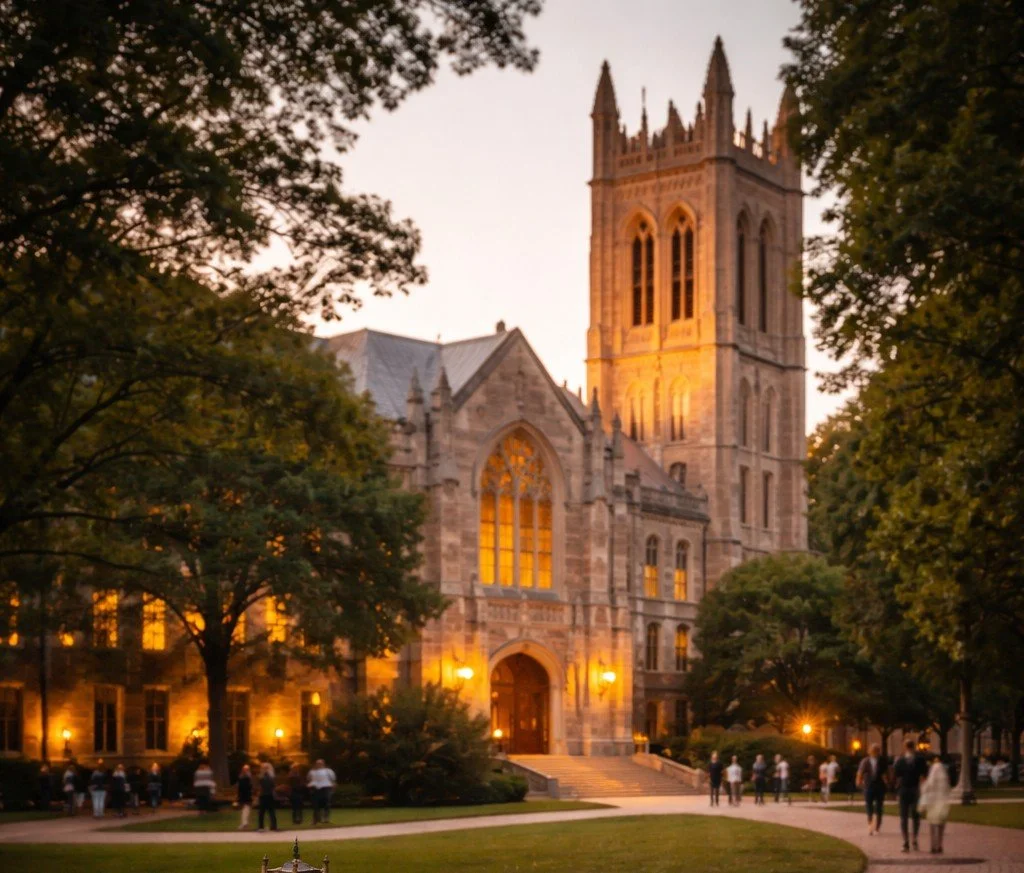
Campus architecture serves as a living record of continuity, memory, and shared identity—shaping how universities honor their past while stewarding their future.
Universities are defined by continuity—across generations of students, alumni, faculty, and benefactors. The buildings that shape a campus become symbols of shared identity, memory, and institutional pride.
While generations will pass through, the institution endures, carried forward by shared values, traditions, and physical spaces. The architecture that shape a campus become more than functional structures; they serve as visual anchors for collective memory.
Lecture halls, libraries, chapels, and quads hold the experiences that define academic life, from first days and commencements to milestone achievements and moments of recognition.
Over time, these structures come to represent institutional identity and pride, embodying both the history a university honors and the future it is committed to sustaining.
That enduring relationship between place and memory is where our studio works—translating campus architecture into meaningful, collectible mementos that universities can share, steward, and sustain over time.
At John Marc Anderson Studios, we transform iconic university architecture into enduring mementos—keepsakes designed to honor donors, commemorate milestones, and mark the moments that matter most in academic life.
Why Architecture Resonates in Higher Education
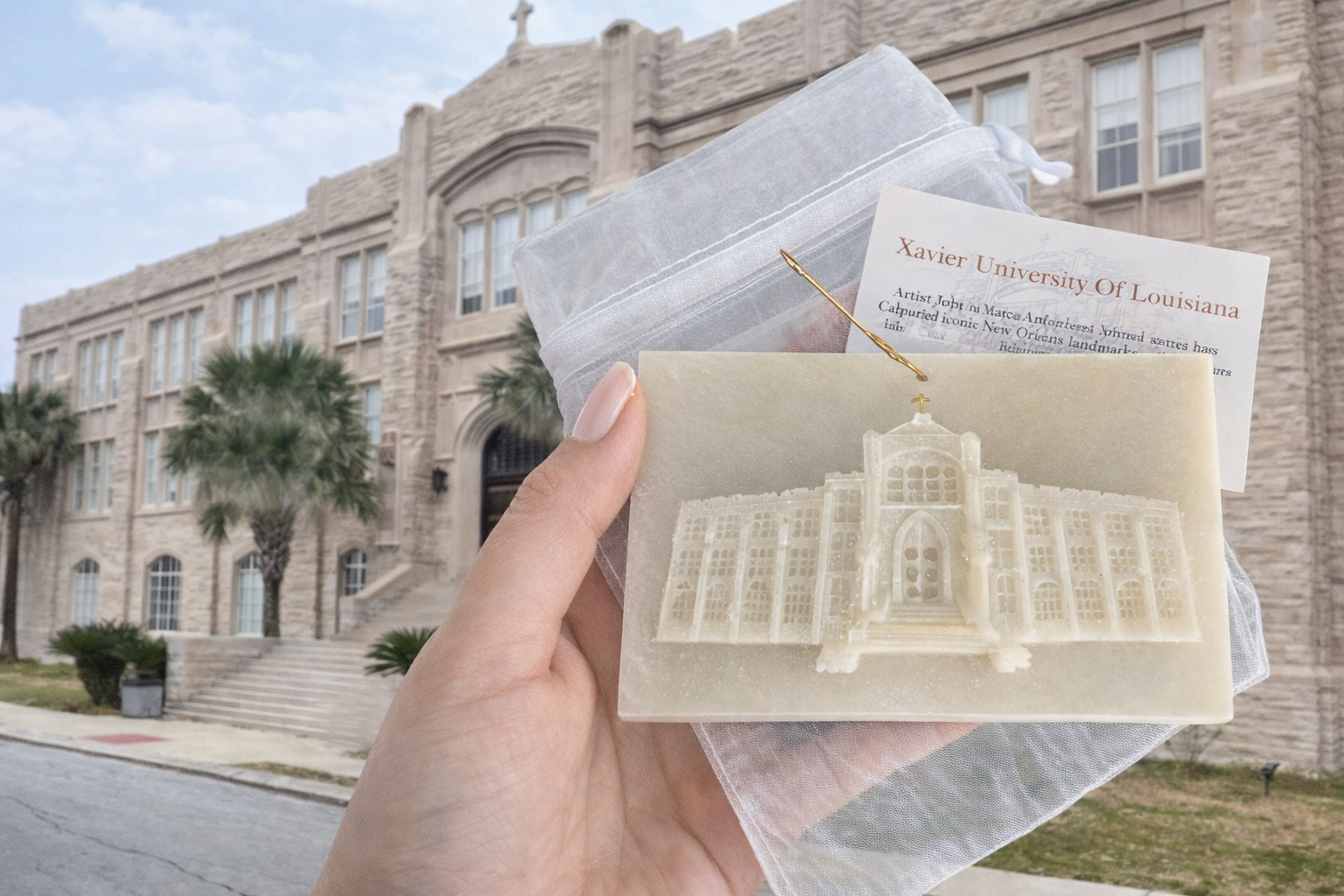
A project our studio completed for Xavier University of New Orleans. The memento we created for them, a miniature replica of their historic administration building, is used for a host of applications from patron dinners, commencements, donor gifts, leave behinds, and more.
When architecture is translated into a memento, it becomes a tangible expression of belonging—an object that connects individuals to the institution long after an event or ceremony concludes. We’ve created projects for universities that might have started out having one purpose in mind, say as a leave behind gift at a patron’s event.
Attendees found the mementos so nostalgic and moving, that the school began handing them out at commencements and selling them in their campus bookstores.
Campus architecture carries meaning beyond function. An institutional icon may be a library, chapel, or sporting arena—places where generations of students and supporters have gathered, learned, competed, and celebrated.
These structures become visual shorthand for shared experience, holding stories that stretch across decades: late nights of study, commencement processions, championship seasons, and moments of collective pride. Over time, such buildings come to represent not just what happens within their walls, but the values and aspirations of the institution itself.
A single building or architectural element can represent:
Academic achievement
Philanthropic vision
Institutional growth
Generational legacy
Long after the event has passed, a significant piece of architecture continues to recall the place, the people, and the shared investment that define an individual’s relationship with the institution. Removed from the context of the ceremony, the memento becomes part of everyday life, quietly resurfacing memories of commitment and connection.
It calls to mind the colleagues and leaders who stood in the room, the cause that brought them together, and the sense of purpose that accompanied the moment. In this way, the object does more than commemorate an occasion—it sustains the relationship itself, reinforcing affiliation and loyalty over time.
Because these mementos live on well beyond the moment they commemorate, they carry value that extends past recognition alone. For universities, municipalities, places of worship, or museums- this creates an opportunity to thoughtfully align meaning with sustainability—offering architectural mementos through advancement initiatives, milestone events, and continued sales programs in ways that reinforce affiliation while generating ongoing support.
Rather than transactional items, these objects become purpose-driven offerings, allowing institutions to steward relationships, extend engagement, and responsibly monetize their most meaningful architectural assets.
How Universities Use Architectural Mementos

Plastic trophy or enduring memento? Choosing the right gift for stewardship programs, donors, attendees, patrons, and advancement initiatives should create lasting presence.
Donor Recognition & Stewardship
Universities often seek alternatives to stereotypical gifts like plaques, trophies, or coffee mugs, recognizing that such items rarely reflect the depth of the relationships they are meant to honor.
Easily manufactured consumable gifts offer short-lived appreciation, and carry little lasting presence or personal meaning.
As institutions place greater emphasis on stewardship and long-term engagement, there is growing interest in recognition that feels enduring, thoughtful, and aligned with the values of academic or organizational life.
Capital Campaigns & Advancement Milestones

Students and faculty move across a historic academic quad, with a classically styled campus building anchoring the scene—an enduring symbol of institutional identity, continuity, and the shared memory that connects generations of alumni and donors.
Campaigns are defined by moments of progress. Within academic environments, capital campaigns are shaped by defining moments of progress rather than final totals alone. Groundbreakings, major gift announcements, building dedications, endowed chair unveilings, and campaign close events serve as visible markers of institutional momentum.
The architecture or icon being celebrated is not only low-hanging fruit for donor recognition—it is a shared symbol of institutional identity. Academic buildings, historic quadrangles, and campus landmarks carry collective memory, signaling continuity, rigor, and belonging across generations of students and alumni.
These milestones translate long-term academic vision into tangible achievement—making progress legible to faculty, alumni, donors, and governing boards alike.
Architectural Mementos for Academic Advancement
In academic environments, architecture is more than infrastructure—it is identity. Signature buildings, historic halls, and campus landmarks embody institutional memory, intellectual rigor, and continuity across generations. When leveraged thoughtfully, architecture becomes a powerful tool for advancement, recognition, and stewardship.
Architectural mementos transform these enduring symbols into tangible artifacts—marking progress, honoring service, and reinforcing shared success.
Alumni Awards & Institutional Honors
From distinguished alumni awards to faculty and academic leadership recognition, universities require objects that reflect academic gravitas and institutional credibility.
Architecture-based mementos:
Avoid corporate or generic award aesthetics
Carry symbolic authority rooted in campus identity
Feel worthy of the honor being bestowed
By drawing from recognizable buildings or campus icons, these awards reinforce legitimacy, permanence, and the enduring relationship between recipient and institution.
Building Dedications & Campus Expansion
New facilities, renovations, and historic restorations mark pivotal moments in a university’s evolution. These projects reshape not only the physical campus, but the academic future it supports.
Architectural mementos are commonly presented to:
Naming donors
Planning and capital campaign committees
Foundational and early-stage supporters
In these moments, the architecture itself becomes the artifact—capturing vision, investment, and institutional ambition in a form that endures.
Presidential Transitions & Leadership Recognition
University presidents and senior leaders leave their most lasting marks through the buildings they champion, expand, or restore. Architecture provides a dignified framework for recognizing leadership without sentimentality.
Architectural mementos:
Honor stewardship with restraint and authority
Connect leadership tenure to tangible legacy
Provide permanent, institutionally aligned recognition
Rather than personalizing achievement, these pieces situate leadership within the broader continuum of campus history and mission.
Why Architecture Endures
The architecture or icon being celebrated is not merely low-hanging fruit for recognition—it is a shared symbol of institutional identity. By anchoring advancement milestones to the built environment, universities transform philanthropy, service, and leadership into visible, lasting expressions of academic purpose.
Designed for Universities, Crafted to Endure
Our projects begin with a campus landmark meaningful to your institution—a hall, chapel, library, stadium, or historic structure. That architecture is carefully translated into a handcrafted memento designed to feel timeless, substantial, and appropriate for academic settings.
These pieces are suited for:
University advancement offices
Alumni relations teams
Development and stewardship programs
Campus event and protocol offices
A Meaningful Alternative to Traditional Recognition
Universities choose architectural mementos because they:
Reflect institutional identity
Age well across decades
Live visibly in offices and homes
Reinforce long-term affiliation
They are not promotional items, rather, they are symbols of academic belonging.
Public and Private Universities: Different Models, Shared Opportunity
While public and private universities operate under different funding structures and governance models, both rely on moments of recognition, affiliation, and stewardship to sustain long-term support. Architectural mementos provide a flexible framework that adapts to each environment—respecting institutional constraints while creating meaningful, scalable value.
Public Universities: Scale, Access, and Broad Affiliation
Public universities serve large, diverse constituencies. Their campuses are civic spaces, deeply embedded in regional identity and public life. Architecture at public institutions often carries layered meaning—symbolizing educational access, economic mobility, and shared investment across entire communities.
For public universities, architectural mementos are particularly effective because they:
Scale across large donor and alumni bases
Support recognition without exclusivity
Align with stewardship and public mission narratives
Integrate naturally into campus retail and visitor programs
These mementos are often used to:
Mark major gifts without creating tiered exclusivity
Recognize long-serving faculty and staff
Commemorate capital projects funded through public-private partnership
Offer meaningful, mission-aligned items through campus stores
In this context, monetization is not about prestige—it is about participation, allowing many constituents to carry a piece of the institution’s identity with them while supporting its future.
Private Universities: Depth, Distinction, and Legacy
Private universities often operate within more concentrated donor ecosystems, where recognition carries heightened symbolic and relational importance. Their architecture frequently reflects long institutional histories, philanthropic vision, and intentional preservation.
For private universities, architectural mementos function as:
High-touch recognition pieces for leadership donors
Objects of legacy tied to named buildings and endowments
Thoughtful alternatives to traditional plaques or trophies
Limited, collectible items aligned with institutional distinction
These mementos are commonly incorporated into:
Leadership donor recognition
Campaign milestones
Trustee and advisory board engagement
Special anniversary and dedication events
Here, monetization is quieter and more selective—focused on endurance, authorship, and meaning, rather than volume.
One Approach, Two Contexts
The strength of architectural mementos lies in their adaptability.
Public institutions benefit from their scalability and inclusivity.
Private institutions benefit from their depth and symbolic authority.
In both cases, the architecture itself provides the narrative—allowing universities to transform shared spaces into enduring expressions of affiliation that support stewardship, engagement, and long-term sustainability.
Whether public or private, universities share a common challenge: how to honor place, people, and purpose in ways that endure. Architectural mementos offer a principled solution—one that respects institutional identity while responsibly extending its value.